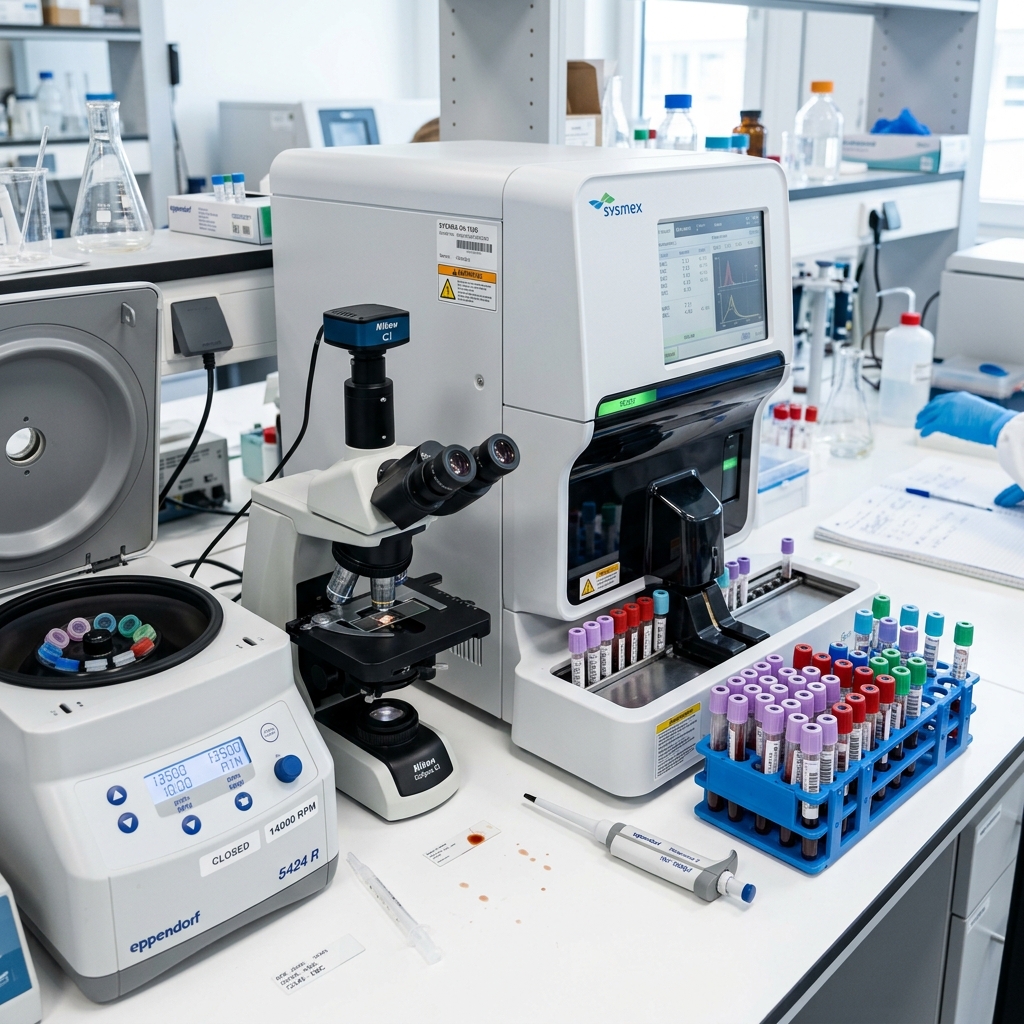

Receiving a blood test report can feel overwhelming — rows of numbers, abbreviations, and reference ranges that seem like a foreign language. But understanding your results is an important step in taking charge of your health. At Biomedic Diagnostic Center, we believe every patient deserves to understand what their results mean.
"Knowledge is the first step to health. When you understand your results, you can make better decisions about your wellbeing."
— Biomedic Diagnostic Center
1. Full Blood Count (FBC)
The Full Blood Count is one of the most commonly requested tests. It measures different components of your blood and can detect a wide range of conditions including anaemia, infections, and blood disorders.
- Haemoglobin (Hb): Measures oxygen-carrying capacity. Low levels indicate anaemia. Normal: 12–17 g/dL depending on gender.
- White Blood Cells (WBC): High levels may indicate infection or inflammation. Low levels may suggest immune suppression. Normal: 4.5–11 × 10³/μL.
- Platelets: Involved in blood clotting. Low platelets can indicate bleeding disorders. Normal: 150–400 × 10³/μL.
2. Kidney Function Test (KFT)
Also called Renal Function Test, this panel checks how well your kidneys are filtering waste from the blood.
- Creatinine: A waste product filtered by the kidneys. High levels can indicate kidney disease. Normal: 0.6–1.2 mg/dL.
- Blood Urea Nitrogen (BUN): Another kidney waste marker. Normal: 7–20 mg/dL.
- Uric Acid: High levels can cause gout. Normal varies by gender.
3. Liver Function Test (LFT)
This test checks the health of your liver — one of the most vital organs in your body.
- ALT / AST: Liver enzymes. Elevated levels indicate liver inflammation or damage.
- Bilirubin: High bilirubin causes jaundice (yellowing of skin/eyes).
- Albumin: A protein made by the liver. Low levels can indicate chronic liver disease.
4. Fasting Blood Sugar (FBS) / Diabetes Screening
This test checks your blood glucose levels to screen for diabetes or pre-diabetes.
- Normal: Less than 100 mg/dL (fasting)
- Pre-diabetes: 100–125 mg/dL
- Diabetes: 126 mg/dL or higher (confirmed by repeat testing)
What To Do With Your Results
If any of your results fall outside the reference range, do not panic. Reference ranges are guidelines, and one abnormal value doesn't always mean something is wrong. Factors like diet, medication, stress, and hydration can all affect results. Always discuss your results with a healthcare professional who can interpret them in the context of your overall health.
At Biomedic Diagnostic Center, we don't just hand you a piece of paper — we take time to explain your results and guide you on appropriate next steps. Book your comprehensive blood test today and take the first step toward understanding your health.